Industrial Inkjet Printer: The All-Rounder Inkjet Labeling Innovator for the Industrial Sector
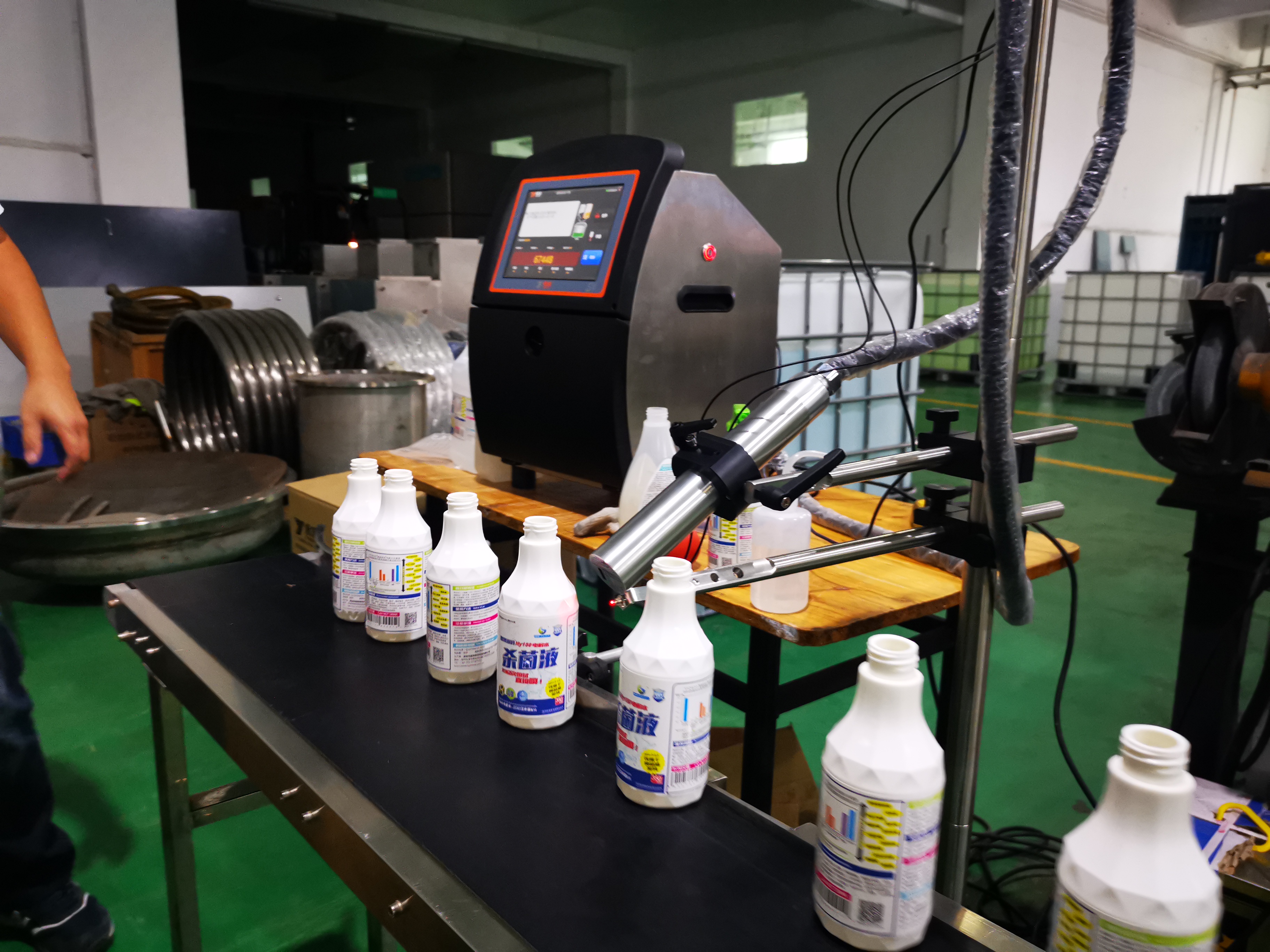
In today's rapidly developing manufacturing industry, product identification and traceability have become the core aspect of quality control. Industrial Inkjet Printer, with its efficiency, precision and flexibility, is reshaping the inkjet coding standards from food packaging to electronic components. According to statistics, the global industrial inkjet coding market is expected to grow at a compound annual growth rate of 7.4% by 2027, and Industrial Inkjet Printer is the main driving force behind this growth.
Why has the Industrial Inkjet Printer become a standard equipment in the manufacturing industry?
The traditional marking methods (such as labels and mold stamping) can no longer meet the demands of modern production lines. The Industrial Inkjet Printer addresses three major pain points through non-contact and high-speed printing:
Efficiency bottleneck: Take the beverage filling line as an example. After adopting the high-speed Industrial Inkjet Printer, it can print 120,000 times per hour, far exceeding the traditional labeling efficiency (about 20,000 times per hour).
Material compatibility: From metal cans to plastic packaging, the ink of the Industrial Inkjet Printer can adhere to over 90% of industrial materials, and it complies with food-grade safety standards.
Variable data printing: Without the need for plate making, dynamic information such as batch numbers and QR codes can be modified in real time, helping enterprises meet regulatory requirements. After being applied by an automotive component manufacturer, the production line switching time was reduced from 3 hours to 10 minutes.
How does the core technology ensure stability?
An excellent Industrial Inkjet Printer relies on three core technologies:
Piezoelectric printhead: Controls the accuracy of ink droplets through voltage (error ≤ 0.2mm), ensuring clear characters even under high-speed vibration.
Recirculating ink supply system: Equipped with a degassing component and a constant temperature module to ensure stable ink viscosity. Experimental data shows that after continuous operation for 24 hours, the inkjet clarity still remains at 98.5%.
UV curing system: For high-transparency materials (such as glass bottles), the UV Industrial Inkjet Printer completes curing in 0.1 seconds, and the wear resistance test passes at 100%.
The verified application value of the industry report
According to the "2024 Industrial Labeling Technology White Paper", the average downtime of enterprises using Industrial Inkjet Printers has been reduced by 76%. Moreover, in a survey of 500 global manufacturers, 82% of the enterprises believe that the remote diagnostic function of Industrial Inkjet Printers has significantly reduced maintenance costs. For instance, after a certain chemical plant introduced an IoT intelligent Industrial Inkjet Printer, through the predictive maintenance module, ink waste was reduced by 40%, and both environmental benefits and economic gains were simultaneously enhanced.
Future trend: From printing to Internet of Things nodes
The next-generation Industrial Inkjet Printer will integrate AI visual inspection: The system captures the character quality in real time (with an accuracy of up to 99.99%) while the inkjet printing is in progress. If there are any defects, it will automatically re-print them. Meanwhile, the 5G version enables operators to remotely adjust parameters via mobile devices, truly achieving an "unmanned" workshop. This Industrial Inkjet Printer is not only a printing tool but also a key entry point of the production data chain.
In conclusion, from enhancing production efficiency to reducing operational risks, Industrial Inkjet Printers have continuously driven the upgrading of the manufacturing industry through technological innovation. If enterprises wish to seize the initiative in the digital transformation, investing in high-performance Industrial Inkjet Printers will be a wise long-term choice.





